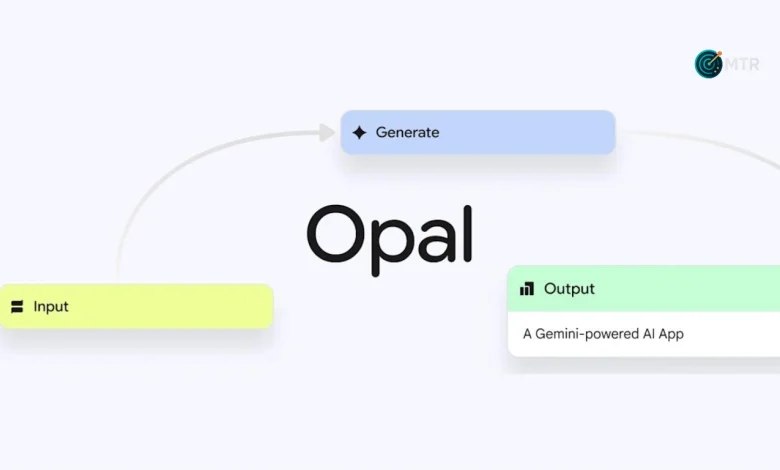
Google has expanded its AI vibe-coding app, Opal, to 15 additional countries, enhancing its performance and debugging capabilities. Initially launched in the U.S. in July 2025, Opal allows users to create mini web apps using text prompts without any coding knowledge. The expansion aims to broaden access to non-technical creators worldwide.
Key Takeaways:
- Expansion: Google’s Opal app is now available in 15 new countries, including Canada, India, Japan, South Korea, Vietnam, Indonesia, Brazil, Singapore, Colombia, El Salvador, Costa Rica, Panamá, Honduras, Argentina, and Pakistan.
- Functionality: Opal enables users to create mini web apps from text prompts, utilizing various Google models to generate applications without coding.
- Performance Improvements: Google has enhanced Opal’s performance, reducing app creation time and enabling parallel execution of workflow steps.
- Debugging Enhancements: The app now features improved debugging tools, allowing users to pinpoint errors in real-time within a visual editor.
- Quote: Megan Li, a senior product manager at Google Labs, stated, “The ingenuity of these early adopters made one thing clear: we need to get Opal into the hands of more creators globally”.
Factual Recap:
Google has expanded its AI-powered vibe-coding app, Opal, to 15 additional countries, marking a significant step in its global rollout. Opal, which was initially launched in the United States in July 2025, is designed to empower non-technical users to build app prototypes without writing any code. The app allows users to describe the app they want to create through text prompts, and it uses various Google models to generate the application. Once generated, users can customize the visual workflow, including inputs, outputs, and generation steps, and share the final app with others via a web link.
The expansion comes with several key improvements to Opal’s performance and functionality. Google has significantly reduced the time it takes to create a new app, which previously could take five seconds or more. Users can now run multiple steps in a complex workflow simultaneously, speeding up the execution of sophisticated apps. Additionally, the app’s debugging tools have been enhanced to be more user-friendly, allowing users to run their app’s workflow step by step in the visual editor and adjust specific steps in the console. Errors are displayed directly where they occur, providing immediate context and eliminating guesswork .
Megan Li, a senior product manager at Google Labs, highlighted the unexpected creativity and sophistication of the apps developed by early U.S. users, which reinforced Google’s vision of making AI app creation accessible to anyone, anywhere, without coding skills. “When we opened up Opal to users in the U.S. we anticipated they might build simple, fun tools. We didn’t expect the surge of sophisticated, practical and highly creative Opal apps we got instead,” Li said.
Mini Timeline:
- July 2025: Google launches Opal in the United States as an experimental project under Google Labs.
- October 7, 2025: Google announces the expansion of Opal to 15 additional countries, enhancing its performance and debugging capabilities.
- October 8, 2025: Further details on the expansion and improvements are reported, emphasizing the app’s global reach and upgraded features.
Legal Challenges
The expansion of Google’s Opal app into new international markets brings with it a host of legal challenges, particularly concerning data privacy and AI ethics. Countries like Japan and South Korea, known for their stringent data protection laws, may require Google to adapt Opal’s functionalities to comply with local regulations. This could involve modifications to how data is processed and stored, ensuring that user privacy is maintained according to regional standards. Legal experts suggest that navigating these complexities will be crucial for Google to successfully integrate Opal into these markets without facing regulatory pushback.
Political Reactions
Politically, the expansion of Opal could be seen as a strategic move by Google to assert its influence in the global AI landscape. In countries like India and Brazil, where digital transformation is a key governmental focus, Opal’s introduction might be welcomed as a tool for innovation and economic growth. However, in regions where there is a strong push for digital sovereignty, such as the European Union, Google’s expansion could face scrutiny. Policymakers might demand assurances that Opal will not undermine local tech industries or lead to an over-reliance on foreign technology.
International Impact
The international implications of Opal’s expansion are significant, particularly in tech-savvy nations like India and China. In India, where the tech industry is booming, Opal could empower a new generation of app developers, potentially reducing the need for outsourcing to traditional tech hubs. Conversely, in China, where domestic tech companies like Huawei dominate, Google may face stiff competition. The Chinese government’s focus on self-reliance in technology could also pose barriers to Opal’s adoption, necessitating strategic partnerships with local firms to gain a foothold.
Effects on U.S. Universities
U.S. universities, which have long been incubators for tech talent, could see a shift in how students approach app development. With tools like Opal making it easier to create sophisticated applications without coding, the traditional computer science curriculum might evolve to focus more on AI ethics, data management, and application design. This shift could democratize app development, allowing students from diverse academic backgrounds to engage in tech innovation, potentially leading to a more interdisciplinary approach to technology education.
Impact on Outsourcing Firms
The introduction of Opal in countries like India and Pakistan could have profound effects on the outsourcing industry. By enabling non-technical users to create apps without coding, Opal could reduce the demand for traditional software development services. Outsourcing firms might need to pivot towards offering more specialized services, such as AI integration and data analytics, to remain competitive. This shift could lead to a reevaluation of business models within the industry, emphasizing innovation and value-added services over basic app development.
Disagreements and Certainties
The sources agree on the core aspects of Opal’s expansion and its features, such as the improved debugging tools and faster performance . However, there is a slight discrepancy in the emphasis on the reasons behind the expansion. While all sources highlight the surge in creative applications as a driving factor, TechRepublic places more emphasis on the tool’s role in democratizing AI app creation globally . What remains certain is Google’s commitment to enhancing Opal’s capabilities and making it accessible to a wider audience, reinforcing its position as a leader in AI innovation.
FAQ
What is Opal, and how does it work?
Opal is an AI-powered app by Google that allows users to create mini web apps using text prompts. Users describe the app they want to create, and Opal uses Google’s AI models to generate it. The app can then be customized and shared online
Which countries has Opal expanded to?
Opal is now available in Canada, India, Japan, South Korea, Vietnam, Indonesia, Brazil, Singapore, Colombia, El Salvador, Costa Rica, Panamá, Honduras, Argentina, and Pakistan
What improvements have been made to Opal?
Google has enhanced Opal’s debugging tools, allowing for real-time error detection and correction. The app’s performance has been improved to reduce startup times and support parallel workflow execution .
How does Opal compare to its competitors?
Opal competes with tools like Canva, Figma, and Replit by offering a no-code platform for app development. Its unique features, such as real-time debugging and parallel execution, aim to set it apart in the growing market for no-code development tools .
Sources
- tech.yahoo.com
- dataconomy.com
- techrepublic.com